
Casting is the most critical and temperamental phase of precious metal manufacturing. A flawlessly detailed wax master means nothing if porosity, incomplete fills, or shrinkage defects compromise the cast. Choosing the right casting technology determines your workshop's daily yield.
Vacuum Assist Casting: The Precision Standard
Vacuum assist casting utilizes a sealed vacuum chamber to extract air through perforated investment flasks while molten metal is drawn downwards into the cavities. Equipment such as the 2-in-1 Manual Casting Machine and Auto Clamp Vacuum Wax Injector allows micro-filigree and delicate prongs to fill completely without turbulence.
Key Advantages: Superior consistency for intricate micro-pavé mountings, lower oxidation risk, and safer bench operation without exposed mechanical spinning arms.
Centrifugal Casting: The High-Force Workhorse
Centrifugal casting harnesses mechanical inertia to forcefully inject molten gold into the flask via a balanced rotating arm.
Key Advantages: High hydraulic head pressure ideal for dense signet rings, heavy kada bangles, and thick bridal components where maximum metal density is required.
Fluxing & Melting Best Practices
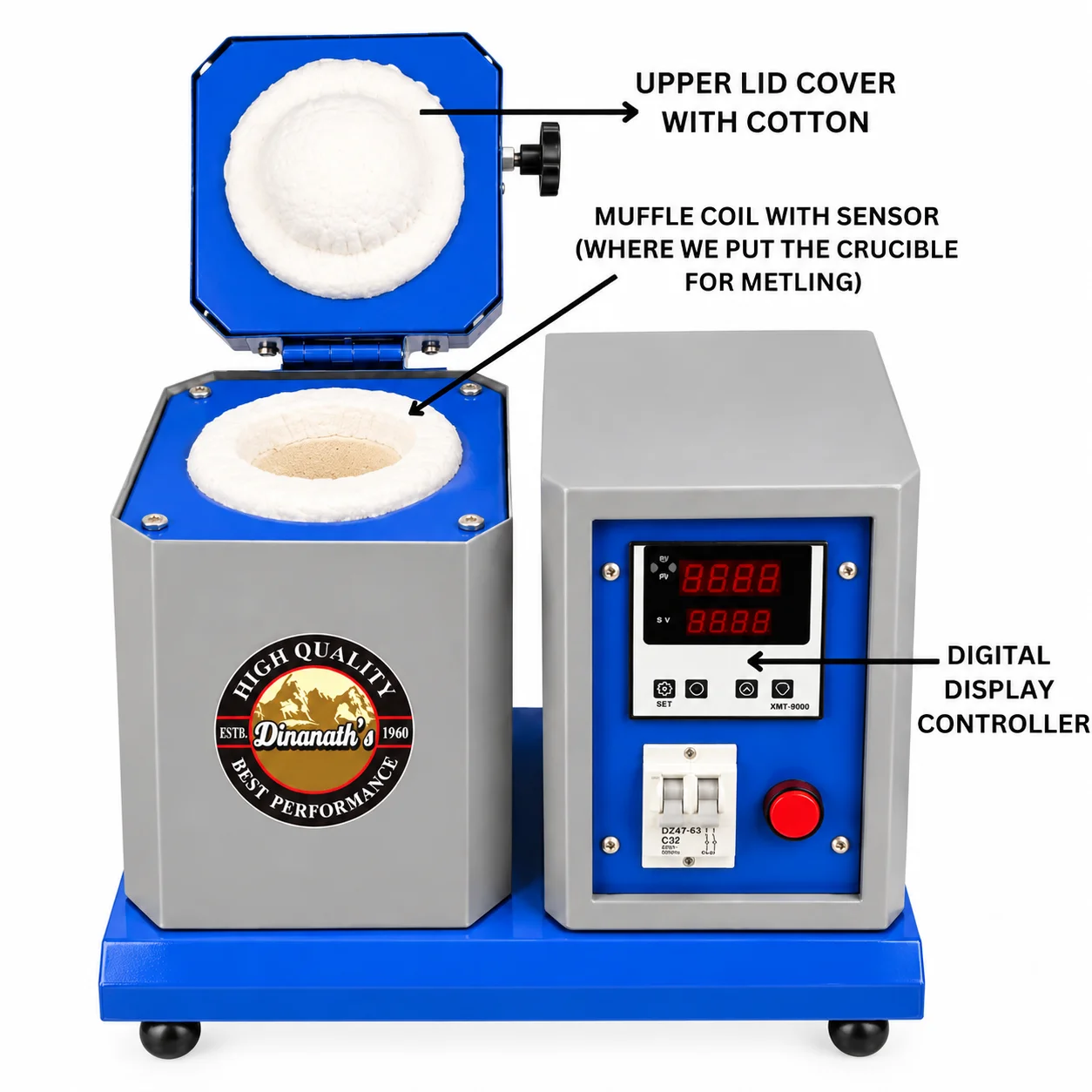
Regardless of machine choice, proper melting with pure borax flux like Suhaga Goti (Solid Borax) in premium Graphite Crucibles is mandatory to prevent slag inclusions and porous surfaces in the final casting tree.
Dinanath Technical Editorial Team
Metallurgy & Casting Specialist
Principal technical contributor specializing in industrial technical and metallurgical protocols. Dedicated to the continuous evolution of precision engineering.